






Legacy system migrations often reveal an uncomfortable reality: over the years, the documentation has become incomplete and the business logic has been buried in the code. This means that understanding how the system actually behaves will take weeks. But at Yonder, we have developed an AI-first approach to relatively quickly defining requirements, enabling decision-making based on clear documentation.
The importance of understanding the requirements for a legacy migration
We worked on a platform for Electric Vehicle (EV) infrastructure management that supports both suppliers and customers.
Instead of approaching the migration as a single, large effort, we began with a specific application section. The goal was to deliver production-ready screens early on in the new stack, validate the migration approach, and reduce risk before scaling the effort.
This meant that we wanted clear visibility into several areas before moving forward:
- UI functionality
- Hidden business logic
- Data flows
- API endpoints
- Integration patterns
Without that visibility, we would risk migrating assumptions instead of the system’s actual behavior.
In legacy software, the most accurate source of truth is rarely found in documentation; it lives in the source code. One of the main challenges in this project was extracting those implementation details directly from the codebase, given the very limited documentation available to support the process.
Introducing AI in the requirements phase
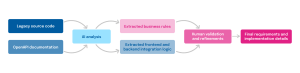
At this point, we introduced AI to become part of the requirements workflow. By analyzing the legacy codebase together with the OpenAPI specification, AI tools helped us understand how the system actually behaved beyond what documentation alone could reveal.
“Instead of relying only on documentation, we used the legacy source code as the primary source of truth. With tools like GitHub Copilot and later Cursor, combined with the OpenAPI specification, we examined the system and extracted key implementation details.
This allowed us to uncover business rules and understand the frontend-to-backend integration patterns directly from the codebase.
As a result, we were able to align requirements with the system’s real behavior from the very beginning of the migration.”
Alex, Project Manager
From analysis to structure
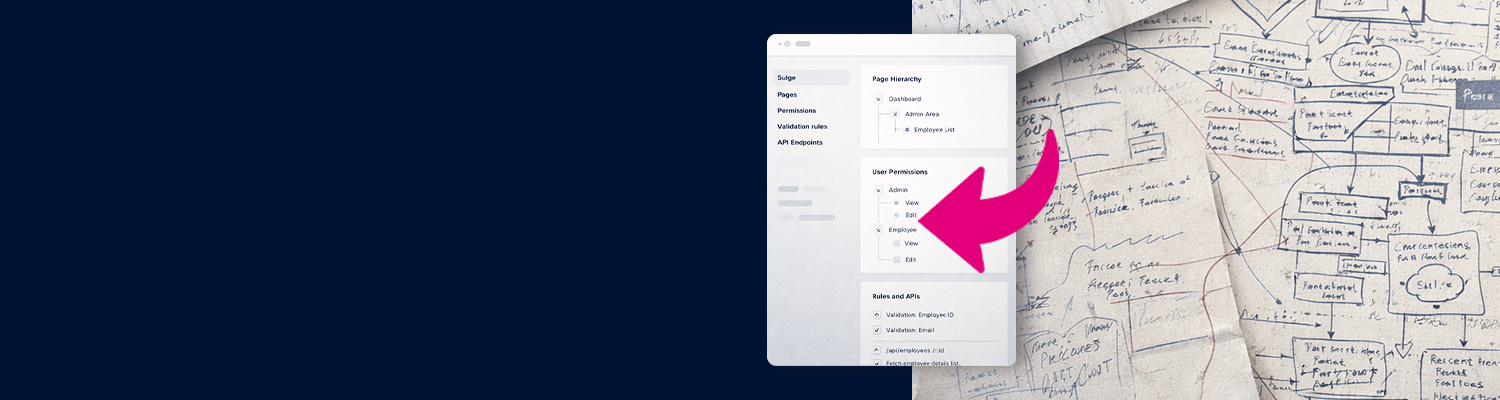
“The AI output generated structured JSON that we transformed into a hierarchical view of the application: pages, permissions, validations, and fields. This gave us a complete picture of the system’s structure and dependencies, and allowed the client to prioritize based on actual logic rather than assumptions.” – Alex, Project Manager
Humans made the decisions and were assisted by AI
AI accelerated the analysis, but it never replaced human judgment.
The entire team remained involved in validating the findings and deciding what should ultimately be built, from the product manager and UI/UX designer to the frontend and backend engineers.
What previously required weeks of effort, multiple meetings, and deep dives into the codebase now only took a few days of focused work. A requirements analyst and software developer, supported by AI-driven analysis from the start, were able to extract and structure the necessary insights much faster.
In some cases, the effort was reduced by more than half, significantly shortening the migration timeline without compromising quality.

What comes next after using AI in the requirements phase?
This was only the starting point. We used the same approach during the development phase, where AI supported implementation and validation.
We will explore how AI was integrated into development in future articles. But if you would like to know now, please fill in the free 1-hour consultancy form, and one of our experts will get in touch with you.
Key takeaways from AI DLC – Requirements
AI does not replace the engineering discipline. Instead, it requires clarity about where it fits within the development lifecycle.
When integrated properly, AI will help teams understand systems faster, thereby reducing rework, and our experts can validate decisions earlier in the process.
That is what AI DLC means in practice: using AI as a practical accelerator within the SDLC, while keeping human expertise at the center of decision-making.
Are you integrating AI into your delivery structure, or treating it as a set of standalone tools?
Book your free
1-hour consultation session
Yonder offers you a 1-hour free consultation with one of our experts. This is for software companies and enterprises and focuses on any concerns or queries you might have.

STAY TUNED
Subscribe to our newsletter today and get regular updates on customer cases, blog posts, best practices and events.