





Client
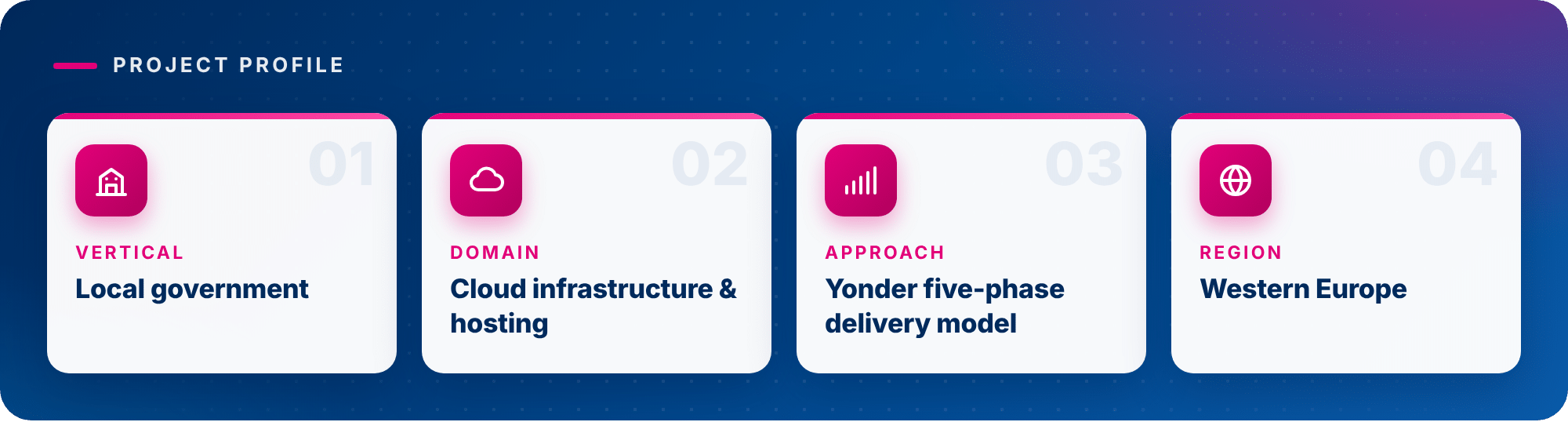
The client is a software provider whose desktop application serves multiple customer organizations, each running in its own dedicated environment (referred to as “the clientˮ throughout). Details have been generalized to protect client confidentiality.
Executive Summary
The client ran its legacy desktop application on infrastructure fully managed by a private cloud vendor. The arrangement was costly and, in a single year, produced a major outage and several smaller incidents that disrupted service to the client’s own customers. Setting up the environment for each new customer took around three weeks. The client decided to move to a different vendor, with two goals: lower infrastructure costs and a more reliable platform.
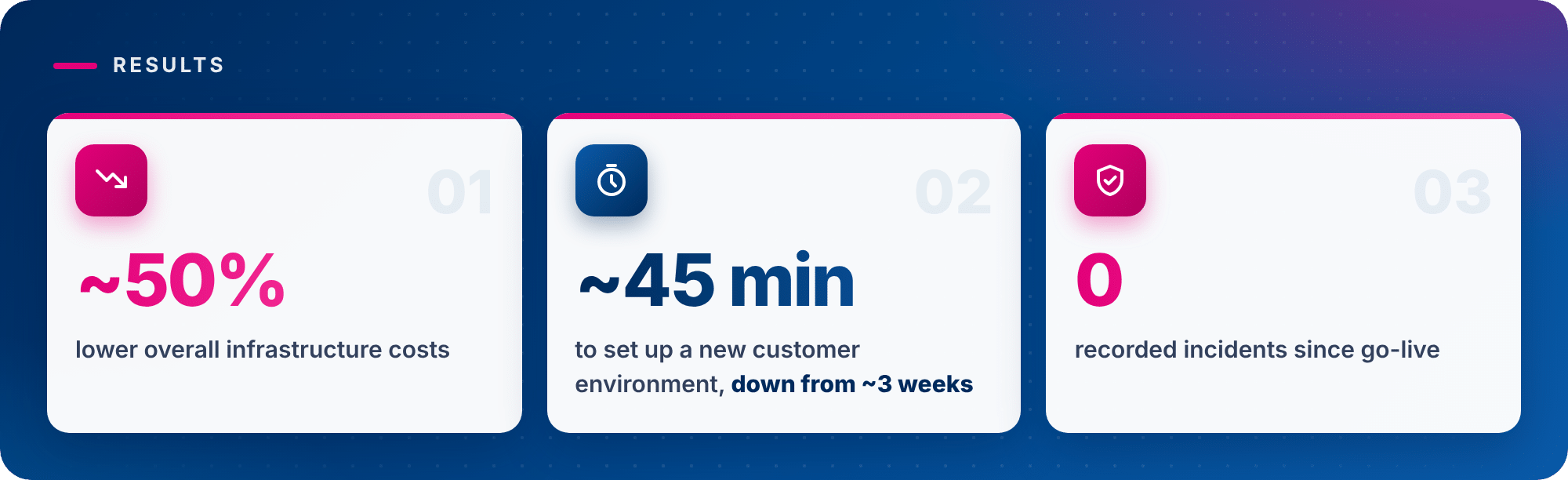
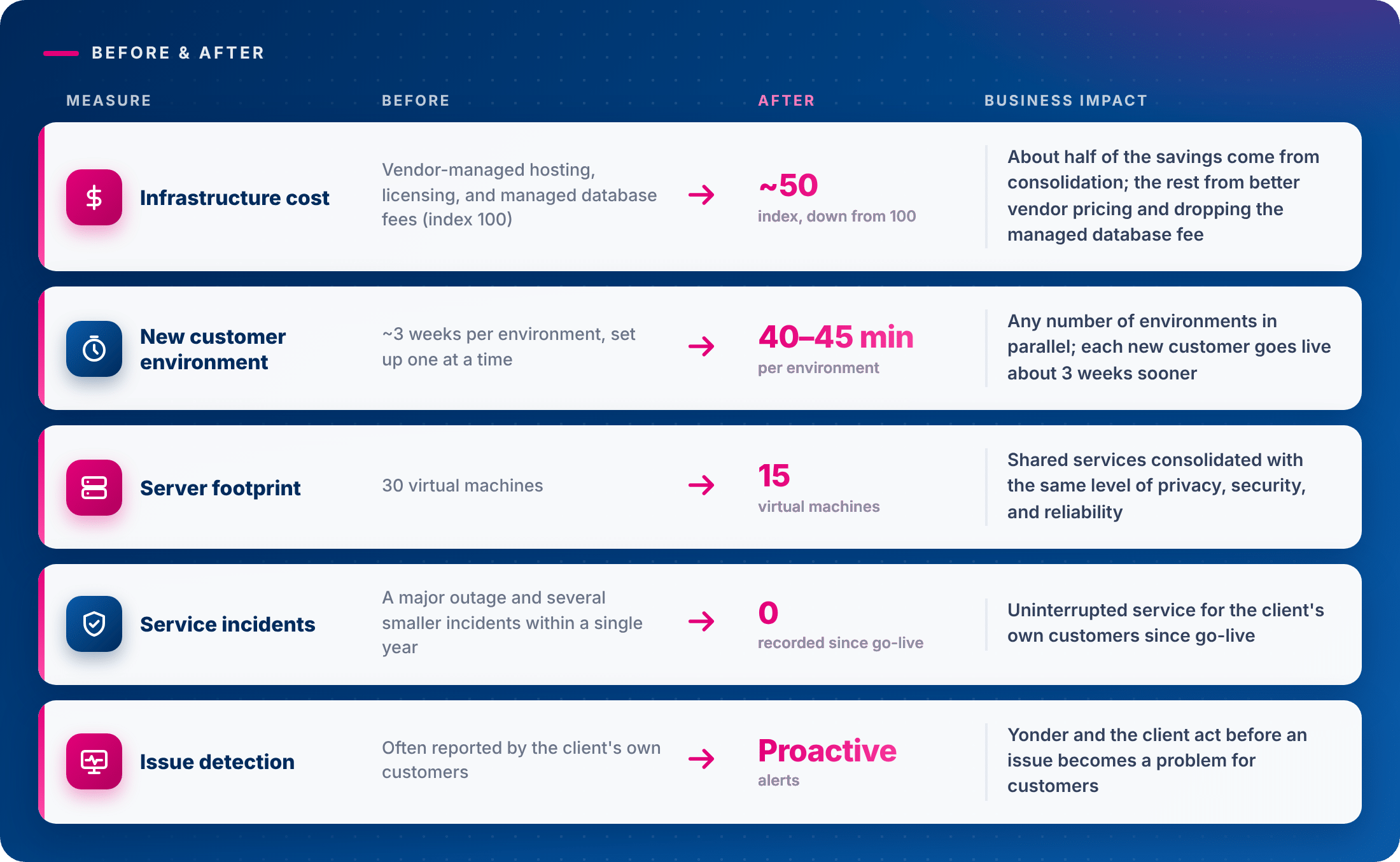
Yonder and the client’s Operations team re-platformed the application onto a new, automated private cloud environment, retaining all services the managed vendor had provided. Overall infrastructure costs dropped by about 50%. A new customer environment is now ready in 40-45 minutes, down from three weeks, and several can be set up at the same time. Since go-live, the platform has had zero recorded incidents, and Yonder continues to monitor and improve it as an ongoing partner.
Context
The client provides a desktop application to multiple customer organizations, each with its own dedicated environment. Under the previous setup, the hosting vendor handled servers, licensing, and patching, while the client managed only the application’s configuration. This left the client with high running costs and limited control over the reliability of the service its customers depended on.
The challenge
- High operating costs: vendor-managed hosting, licensing, and a managed database fee made the infrastructure expensive to run, and costs grew with every new customer.
- Unreliable service: within a single year, the vendor’s platform experienced a major outage and several smaller incidents, each affecting the client’s customers.
- Slow onboarding: setting up the environment for a new customer took about 3 weeks, delaying when the customer could go live and start generating revenue.
- Reactive issue handling: the client often learned about problems from its own customers rather than spotting them first.
- A transition with no gaps: the move to a new vendor had to be seamless, keeping all the services the managed solution offered, including reliable backups.
The approach
Yonder followed its five-phase delivery model, designed to reduce risk at every step of the migration, and worked side by side with the client’s Operations team throughout:
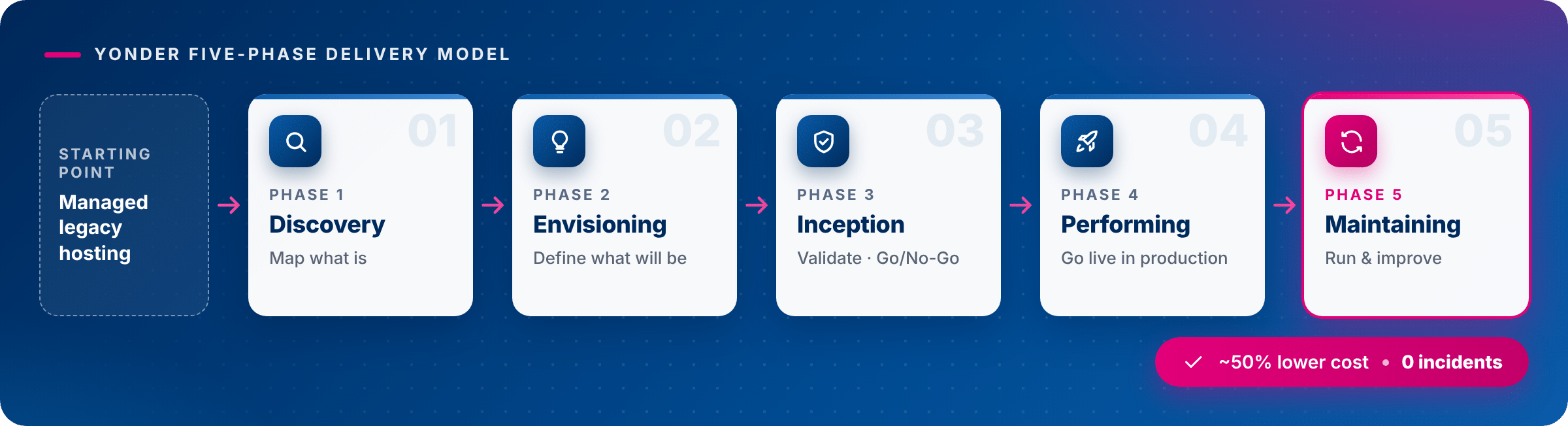
Each phase builds on the previous one, with a joint Go/No-Go decision before anything reaches production. The final phase continues today as an ongoing managed service.
1. Discovery
The team mapped the current situation: how the legacy application works, what it depends on, and every service the managed vendor provides so that nothing would be lost during the move. Yonder ran the discovery sessions on-site with the customer, and working face-to-face with their team made these sessions noticeably more productive.
2. Envisioning
Yonder defined the target setup and the tooling to support it, shaped around the application’s needs. A key design choice was to share common infrastructure across customers, such as database servers and user management services, while keeping each customer’s data private and secure.
3. Inception
Before touching production, the team built test environments to validate every core component, including a purpose-built database backup solution to replace thevendor’s managed service. This phase ended with a formal Go/No-Go decision, taken together with the client.
4. Performing
After the Go decision, all changes were promoted to production, and the go-live was prepared in close collaboration with the client’s Operations team, ensuring a seamless transition for the client’s customers.
5. Maintaining
Since January 2025, Yonder has run the platform as an ongoing partner: applying security updates, monitoring the infrastructure, alerting on critical issues, and automating routine work so the operations team can focus on higher-valuetasks. Periodic improvements are aligned with the client’s business objectives.
AI-assisted cloud development played a direct role in the automation. It helped the team consolidate the setup scripts into a single, reusable template for all customers, so a new customer environment is now created from a single request, with minimal manual input, and several environments can be set up at the same time.
The results: cost, speed & reliability
Comparing the new platform with the previous vendor-managed setup shows gains on every dimension the client set out to improve.
Business value & ROI
- Lower running costs: overall infrastructure costs dropped by about 50%, with savings that hold every month and grow as more customers are added to the shared platform.
- Faster time to revenue: each new customer becomes operational about 3 weeks sooner, so revenue from that customer starts sooner. This gain is not included in the cost savings above.
- Lower cost of incidents: every incident carries both a technical response cost and a business impact. Zero recorded incidents since go-live protects revenue, customer trust, and the client’s reputation.
- Room to grow: with new customer environments ready in under an hour and set up in parallel, onboarding is no longer a bottleneck for growth.
- Teams focused on meaningful work: automated routine operations free the client’s and Yonder’s teams from repetitive tasks, so they can focus on improvements that move the business forward.
Why Yonder
- Risk managed at every step: a structured, five-phase delivery model with test environments and a joint Go/No-Go decision meant the client approved the new platform before it went live.
- A seamless transition: working side by side with the client’s Operations team, Yonder kept every service the managed vendor had provided, including reliable backups, with no disruption for the client’s customers.
- AI-assisted automation: AI-assisted cloud development helped turn a slow, manual setup process into a fast, repeatable one that scales with the client’s customer base.
- A long-term partner: since January 2025, Yonder has continued to run, secure, and improve the platform, with improvements aligned to the client’s business objectives.
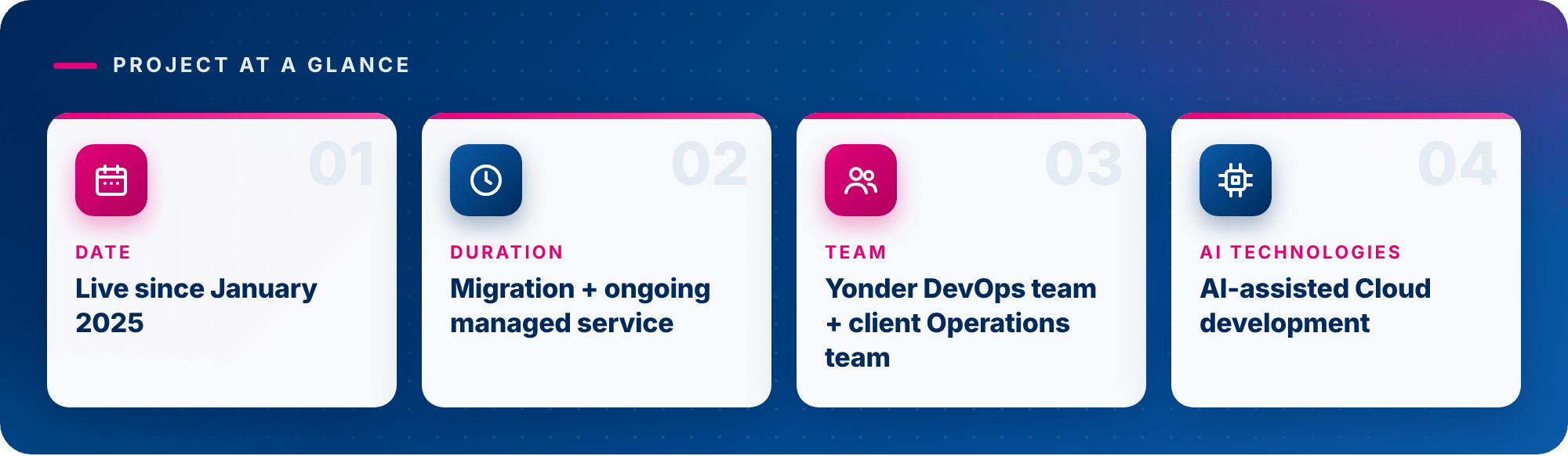
Engagement details
STAY TUNED
Subscribe to our newsletter today and get regular updates on customer cases, blog posts, best practices and events.
