






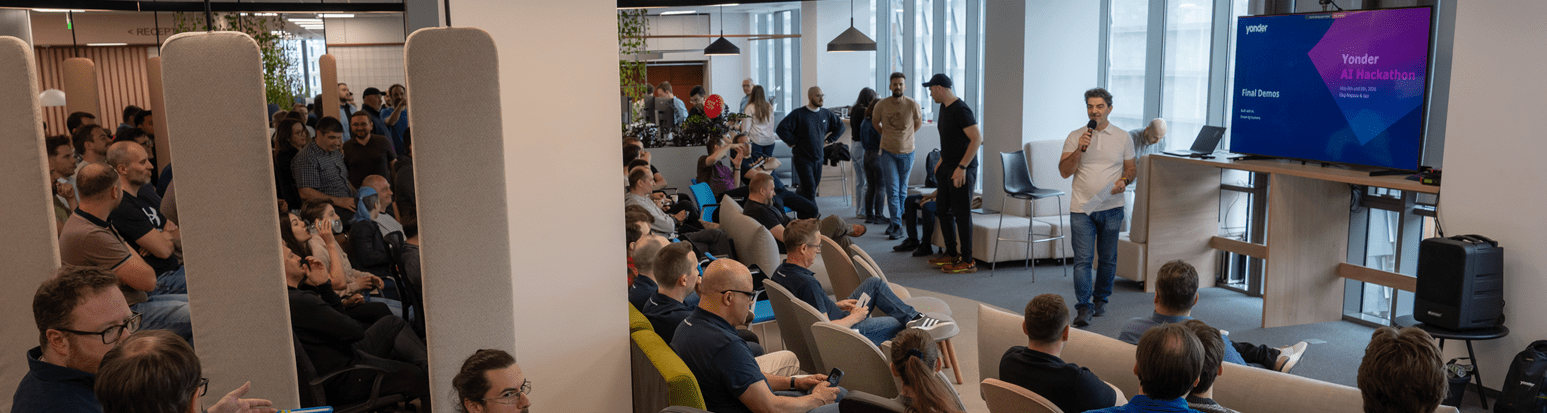
Ten years ago, Yonder organized its first hackathon. The format was simple: bring clients and our own developers together, give them a challenge, a weekend, and enough coffee, and let’s start building. The entire experience and the results were always energizing. But this year was different in a significant way.
For the first time, the initiatives were human-driven and AI-produced. Developers and clients worked side by side, but the keyboard was largely handed to the model. The question was no longer “Can we build this in two days?“ It was “What should we actually build?”
There were 100 projects and 300 people in 2 cities
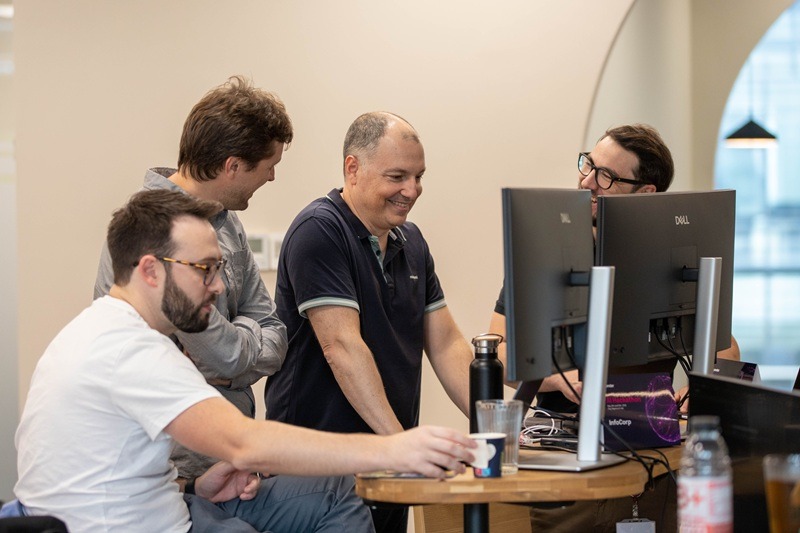
Close to 30 clients joined us across our offices in Cluj-Napoca and Iași, working in nearly 100 project teams with more than 300 participants in total. The scale alone was a milestone, but what stood out was the change in how teams worked together.
When AI handles the implementation, the conversation shifts upstream. Teams spent more time discussing requirements, debating scope, and aligning on what success would look like before a single function was written. Yonder developers moved from writing code to guiding architecture, reviewing outputs, and using their technical expertise to help clients think through all aspects.
The result was a noticeable step up in the quality and coherence of what teams produced. Prototypes were better thought-through. And because the barrier to iteration was so much lower, teams could test an idea, discard it, and try again in the time it would previously have taken to scaffold an entire initiative.
What clients built and what they plan to do with it
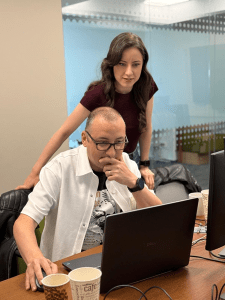 The range of projects reflected just how broadly AI development is now part of the work our clients do. Some teams were modernizing legacy software, using the hackathon to explore what an AI-native rewrite of their core product might actually look like. Others were adding new features such as AI-powered workflows, smarter interfaces, and process automation. Things that their product roadmap had been circling for months.
The survey results afterward confirmed what we saw at the hackathon: 80% of respondents expect the prototype they built to become a real product feature. 60% plan to adopt the AI development lifecycle approach used during the hackathon in their day-to-day work. These are not polite survey answers. They reflect teams that left with something they could actually use.
“Everything was awesome! I enjoyed the experience a lot, and we will participate next year for sure!”
“Being co-located is always hugely valuable, along with seeing the wide range of products being developed.”
The vibe, always harder to measure, yet easy to feel
Something worth naming: the atmosphere was genuinely good. The combination of a shared challenge, a tight timeframe, and the novelty of the AI-first format created a level of energy that’s difficult to manufacture. Table tennis, chess, and foosball were played during intermissions. The breaks and evening brought the teams together, and the hospitality — food, drinks, the venue — all contributed to the kind of event people talk about afterward.
“All the people went above and beyond to ensure that we had a good time.”
“I was hesitant about it being a Saturday, but I think it worked well. We were well looked after in the evening and on Sunday. Thank you.”
The Saturday format, which some attendees approached with mild skepticism beforehand, turned out to work in the event’s favor. It created a different kind of day, less pressured, more exploratory, and the extended time together strengthened connections between client teams and Yonder colleagues that go beyond what a standard project engagement allows.
What we learned
Were there things we could improve? Of course, and that is part of what makes it interesting.
Scoping was the most consistent challenge. AI development moves faster than most teams expected, even sometimes for our Yonder AI experts. Some clients arrived with ambitions that were genuinely achievable in two days; others had scoped for a sprint but built something in hours and then had to improvise. The velocity of AI-generated code remains a calibration challenge, and we will develop better guidance on it next year.
We will also rethink the final presentation round. With close to 100 teams presenting in three-minute slots, the format worked well for time management, but it left little room for depth. Several participants made the same observation independently:
“Something on the presentation side needs to change. Perhaps longer presentations for fewer teams in smaller groups, with others shared on SharePoint to view afterward.”
“The presentation focused heavily on what had been built, but less on the process, the approach, the lessons learned, and the tooling used, which would be interesting from a development perspective.”
This feedback points to an interesting fact. The value of the hackathon is not just in the demo. It is in the thinking behind it, the choices made, the dead ends encountered, and the approach to the AI toolchain. We want to create more space for that next year.
Looking ahead
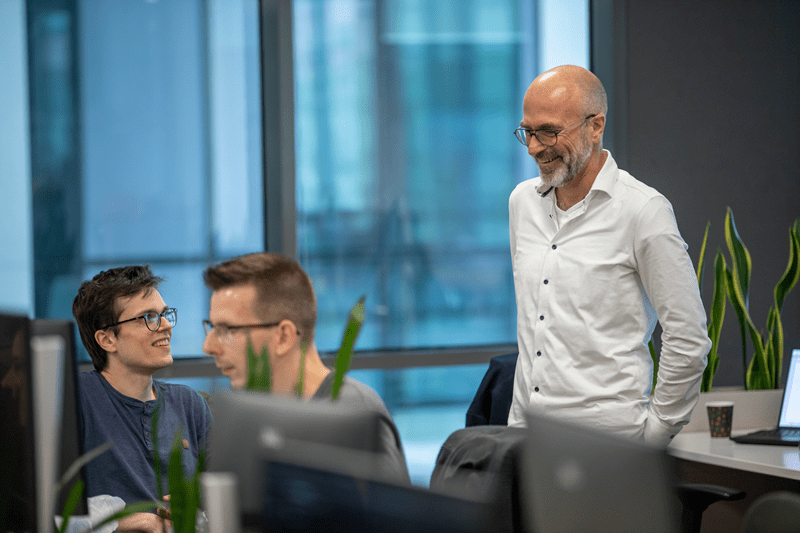
The Yonder AI Hackathon is, at its core, a dedicated time for innovation, exploring what is possible when the right people get into a room together and remove the usual constraints on speed. The AI-first format raises the ceiling on what the teams can build in a weekend.
What we saw this year, the quality of the prototypes, the commercial intent behind them, and the conversations about AI modernization and AI-driven development lifecycles, tells us that our clients are not exploring AI out of curiosity anymore. They are deploying it, and they want to go further. Yonder’s expertise in AI-DLC and AI Modernizations is helping them navigate this new world.
We are already thinking about the next edition. The aftermovie will give you a feel for what the event was actually like.
Would you like to know more about our AI expertise, such as AI Consultancy, AI-DLC, or AI-Modernizations, please contact Paul Cirstean, Remus Pereni, or Dan Calinescu.
STAY TUNED
Subscribe to our newsletter today and get regular updates on customer cases, blog posts, best practices and events.
