






It’s not about the tools, it’s about how we think
How Yonder is shifting from delivering output to value
We have better tools than we have ever had. AI generates code, automates extraction, and rewrites entire modules in much shorter timeframes than ever before. If we no longer question which tooling we use, then what is the lingering question? Are we building the right things? Are we focusing on the right results?
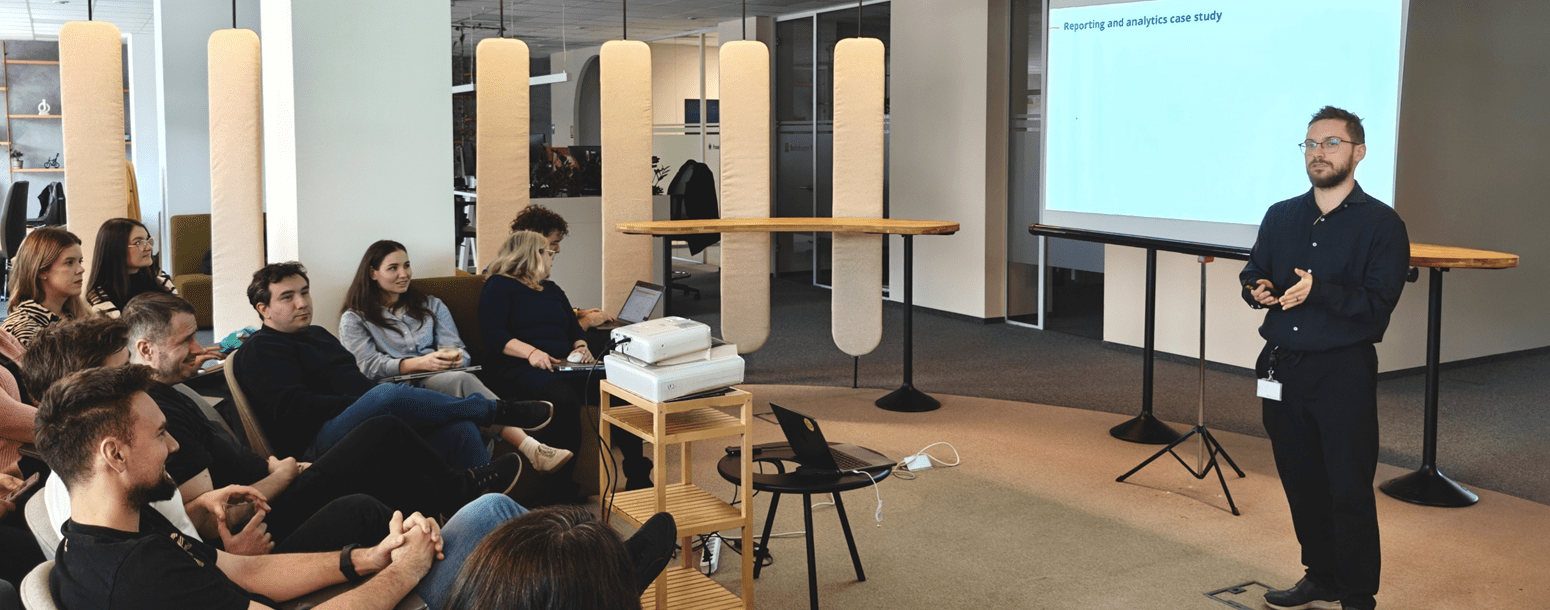
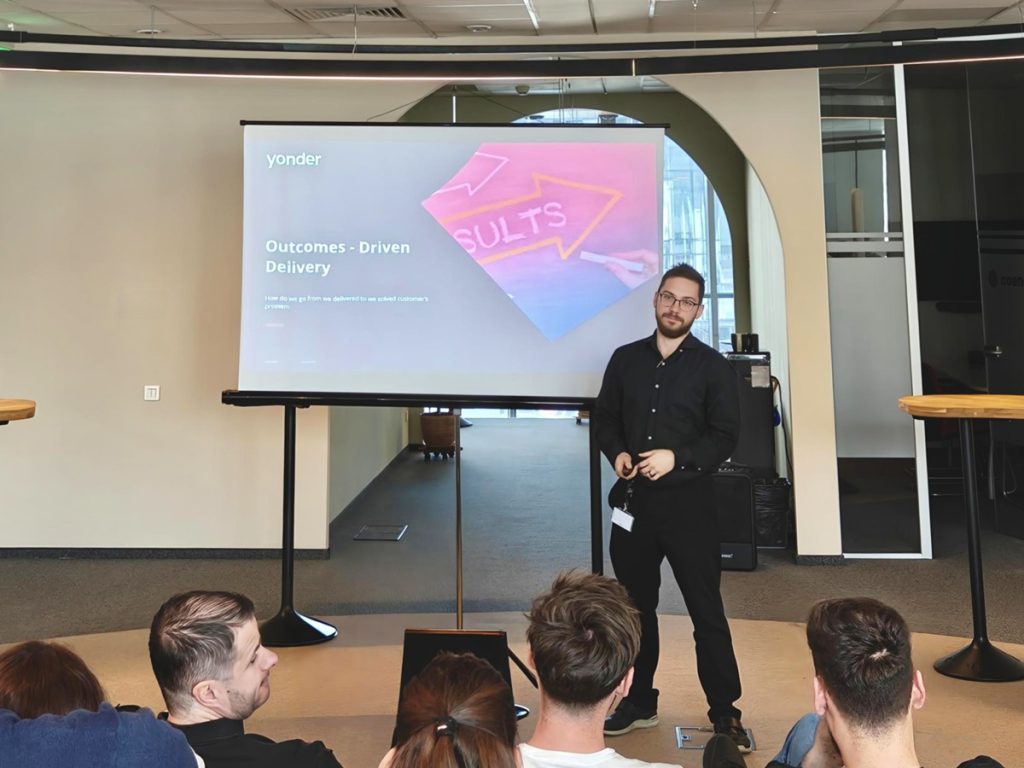
That’s a shift in mindset, not a technology challenge. And we addressed this mindshift during Yonder’s AI Hands-On Week (March 17–19, 2026) in a session called Value-Driven Delivery.
Our continuous shift in delivery
We continuously shape how our teams view value: what it is, how to recognize it, and how to create a scope focused on value. This session did just that: it focused on a pragmatic, efficient way to bring the mindset shift into daily practice.
The premise is direct. Shipping a feature is a cost. Reducing a client’s operational spending, helping them to retain customers and gain new names, cutting user effort per task, those results deliver value. And the gap between ‘we delivered the features’ and ‘we delivered value’ is where the greatest opportunity for improvement lies.
We opened the session with an image that made this gap visible: an iceberg. Above the waterline, you see a neat delivery workflow. A customer sends tickets; we build, deliver, and review. And what is there below the waterline? The real reason why customers send us the tickets. You will find issues such as SLA breaches, features used by only a few clients, or features that can’t be used without assistance. The real issues are invisible until it is too late.
AI requires us to evolve, and we have
AI doesn’t just give us faster tools; it demands a different way of working. Now that we can generate code at an unprecedented speed, the bottleneck shifts. It is no longer ‘can we build it fast enough?’, but it has shifted to ‘are we building the right thing?’ Is the thing we’re building delivering enough value to end users and the customer’s business? If the answer is no, AI just helps you to create the wrong product faster.
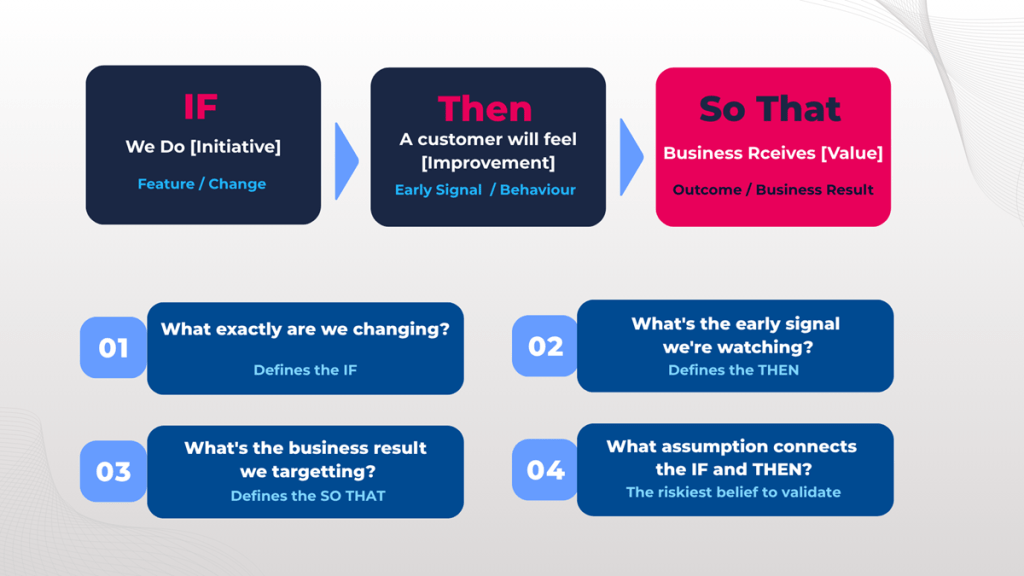
That is why, in our delivery process, we are moving away from tooling toward value, even more so than we have in the past. We invest heavily in helping our people understand value creation and how to apply that to the software we are building, to think beyond tooling and code. The session introduced a framework we have created to capture this: IF we do [initiative], THEN a customer will feel [improvement], so that its business receives [value].
These four questions anchor it.
- What exactly are we changing or creating?
- What is the early signal we are watching for?
- And the one that separates delivery from value delivery: how can we measure whether what we’re building is right, and how quickly can we know?
- What business result can our client expect to achieve?
Every time that we try to build something, there is an assumption in mind that requires validation and measurement. That assumption is the riskiest part of any project: name it, test it, and check it early. We don’t think of that on our own; our client knows the value they want to achieve. Yet in our creation process, the value we will deliver should be top of mind rather than the feature we are developing.
How do we know it works
This isn’t abstract learning; our team applied the model to multiple projects, each with a named assumption and a validation checkpoint.
And the patterns that emerged were consistent. In one engagement, the team assumed the bottleneck was a specific operational process. By naming that assumption upfront and defining an early indicator, they could validate within weeks, not months, whether the initiative was aimed at the right issue. For another customer, the assumption was about where users spent most of their time. Testing it early revealed the real friction point was where neither the team nor the client had expected it to be.
In cases where this discipline was already in place, the outcome spoke for itself: significant productivity gains, major cost reductions, and the ability to scale operations. Not because the team built more, but because they built the right solution, and they knew it was correct before they delivered the feature to test it.
The discipline is always the same: name the riskiest assumption before having AI write a line of code. Define how you know if you’re right, and check it early. This is the scientific method that we apply to product delivery.
Focus on adding value, not features or code
One of the sharpest contrasts in the session was between what we called the Certainty Trap and genuine value delivery. In the trap, the team assumes ‘this will definitely improve things’ without any success criteria, leading indicators, or checkpoints. Trust erodes when it doesn’t work. In the value-driven product mindset, the team will say, “We believe X, and we will know in two weeks.” Providing early checks and proof points will demonstrate transparency and grow trust.
We are not asking our teams to adopt a new tool or a new process. We’re asking them to redefine what ‘done’ means. Done isn’t deployed; done is when the client’s challenge has been solved, or the need has been met.
And we will set the scope for each engagement accordingly. It will not be about how many features we can ship, but about how much value we can add to our client’s business.
The real measure of success
The session ended with something every participant could take into their next conversation: a set of discovery questions designed to surface the real need, the real assumption, and the real measure of success. A practical shift you can bring to work on Monday morning.
At Yonder, we don’t just adopt AI; we use it to evolve our thinking and take the next step in customer-driven development and value-driven software. We’ve written about this evolution before: from rethinking software development in the age of AI to the shift from writing code to building software. Value-driven delivery is the next chapter: it doesn’t matter how fast you ship if you’re shipping the wrong thing.
Interested in having an AI partner look at value-driven engagements for your company? Then get in touch with us.
By Ionut Busecan,
Product Manager

STAY TUNED
Subscribe to our newsletter today and get regular updates on customer cases, blog posts, best practices and events.
